- Home
- »
- Consumer F&B
- »
-
Middle East Plant-based Egg Replacers Market Report, 2033GVR Report cover
![Middle East Plant-Based Egg Replacers Market Size, Share & Trends Report]()
Middle East Plant-Based Egg Replacers Market (2025 - 2033) Size, Share & Trends Analysis Report By Source (Soy, Pea, Chickpea, Potato, Algal), By Form (Powdered, Liquid), By Application, By Country, And Segment Forecasts
- Report ID: GVR-4-68040-811-9
- Number of Report Pages: 110
- Format: PDF
- Historical Range: 2021 - 2024
- Forecast Period: 2025 - 2033
- Industry: Consumer Goods
- Report Summary
- Table of Contents
- Segmentation
- Methodology
- Download FREE Sample
-
 Download Sample Report
Middle East Plant-based Egg Replacers Market Summary
The Middle East plant-based egg replacers market size was estimated at USD 21.8 million in 2024 and is expected to reach USD 38.3 million by 2033, growing at a CAGR of 6.6% from 2025 to 2033. The Middle East plant-based egg replacers market is being propelled by escalating consumer preference for sustainable, allergen-free, and cholesterol-conscious alternatives, alongside rising awareness of plant-based diets and clean-label ingredients.
Key Market Trends & Insights
- By country, Saudi Arabia dominated the Middle East plant-based egg replacers market in 2024 with a revenue share of 28.17%.
- By source, the soy-based egg replacers segment led the market and accounted for a share of 31.50% in 2024.
- By form, the powdered form led the Middle East plant-based egg replacers market and accounted for a share of 72.44% in 2024.
- By application, the bakery & confectionery segment led the market and accounted for a share of 43.58% in 2024.
Market Size & Forecast
- 2024 Market Size: USD 21.8 Million
- 2033 Projected Market Size: USD 38.3 Million
- CAGR (2025-2033): 6.6%
Moreover, strong adoption across bakery, confectionery, foodservice, and packaged food sectors is further accelerating growth, while ongoing innovation in functional, texture-optimized formulations ensures parity with conventional eggs, driving both commercial and retail uptake globally. The Middle East plant-based egg replacer market is witnessing steady growth, driven by a rising shift toward sustainable and health-conscious eating habits. Increasing awareness of the environmental impact of animal agriculture and the growing prevalence of lactose intolerance and egg allergies are encouraging consumers to adopt plant-based alternatives. In countries like the UAE, Israel, and Saudi Arabia, the popularity of vegan and flexitarian diets has surged, particularly among younger, urban consumers. This trend is further supported by the expanding availability of plant-based products across supermarkets, online platforms, and foodservice channels. Additionally, the region’s hospitality and food processing sectors are increasingly experimenting with egg replacers in bakery, confectionery, and ready-to-eat meals to cater to changing consumer preferences.
Technological advancements and innovation in ingredient formulation are further propelling market growth. Manufacturers are developing clean-label, soy-free, and allergen-free replacers using proteins from peas, mung beans, and chickpeas to meet regional dietary needs and appeal to health-focused consumers. The introduction of international plant-based brands and collaborations with local distributors has also enhanced accessibility and awareness. Moreover, government initiatives promoting food security and sustainable agriculture are fostering investment in alternative protein sectors. Collectively, these factors are positioning the Middle East as an emerging hub for plant-based egg replacement innovations.
Consumer Insight
Consumer behavior in the Middle East plant-based egg replacer market is being shaped by a young, health-aware, and sustainability-conscious demographic. Millennials and Gen Z consumers, especially those aged between 20 and 40, are driving the adoption of plant-based alternatives due to their openness to new food innovations and ethical consumption habits. Women, in particular, represent a significant consumer base, as they are often primary decision-makers for household food purchases and are more inclined toward vegan, low-cholesterol, and clean-label products. Urban centers such as Dubai, Riyadh, and Tel Aviv are seeing higher adoption rates, driven by increasing exposure to global plant-based food trends and the rise of fitness-oriented lifestyles.
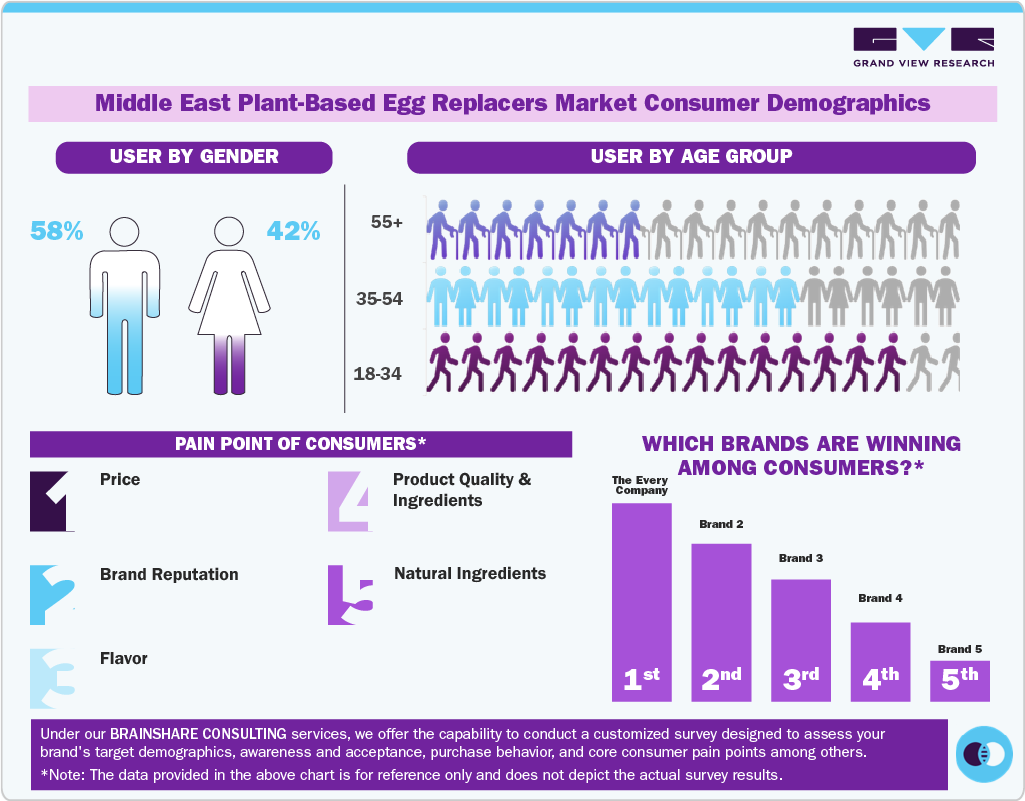
Furthermore, male consumers are gradually embracing plant-based egg replacers as part of a protein-rich, performance-focused diet, supported by rising interest in fitness and sports nutrition. Younger consumers tend to prefer convenient, ready-to-use products for home cooking and baking, while older age groups are drawn to plant-based substitutes for their perceived health benefits, such as improved heart health and cholesterol management. Growing awareness through social media campaigns and influencer marketing has further enhanced acceptance among digitally connected consumers. Overall, the Middle East market reflects a diverse yet evolving consumer base that values health, sustainability, and innovation in food choices.
Source Insights
Soy-based egg replacers segment led the market, accounting for a share of 31.50% in 2024. The dominance of this segment is attributed to soy’s high protein content, excellent emulsifying properties, and versatility across multiple food applications, including bakery, confectionery, and savory products. Soy-based replacers closely mimic the texture and binding characteristics of traditional eggs, making them a cost-effective and reliable alternative for both commercial and household use. Additionally, the availability of soy ingredients and established processing technologies has supported large-scale production. Growing consumer familiarity with soy protein and its nutritional benefits continues to drive the segment’s adoption across the region.
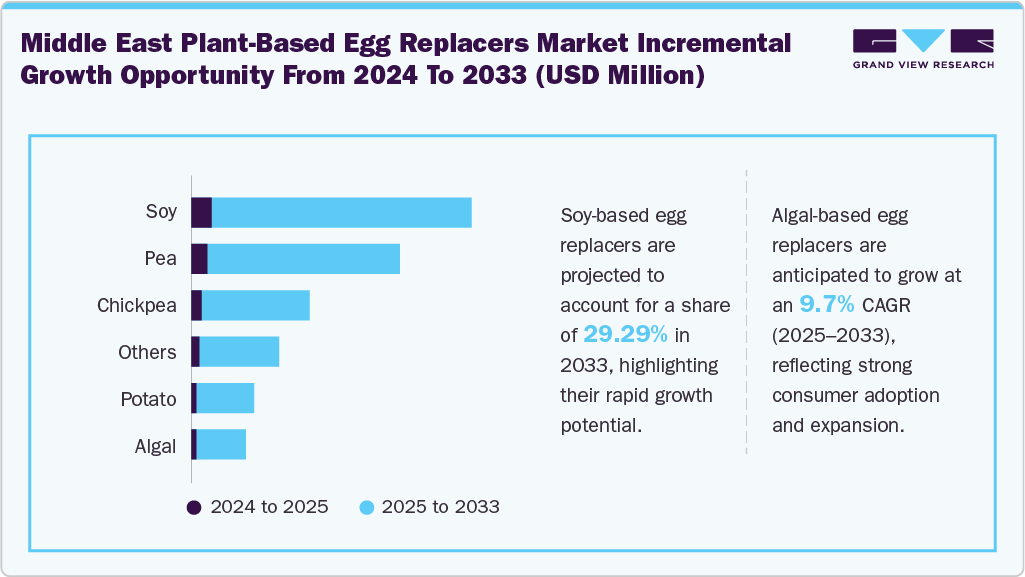
Algal-based egg replacers segment is anticipated to witness a CAGR of 9.7% from 2025 to 2033. Algal ingredients are naturally rich in proteins, vitamins, and omega-3 fatty acids, making them a nutritionally attractive alternative to eggs. Their functional properties, such as foaming, emulsification, and gelling, allow them to replicate key egg functionalities in recipes. As consumers increasingly look for foods that deliver both health benefits and high performance in cooking and baking, algae-based egg replacers are gaining attention. One of the most notable trends is the adoption of microalgae in bakery and processed foods as an egg replacer.
Form Insights
Powdered plant-based egg replacer accounted for the largest share of 72.44% of the revenue in 2024. Powdered plant-based egg replacers are gaining traction due to their superior shelf life, ease of storage and transportation, and reduced risk of spoilage compared to liquid alternatives. Their precise dosing ensures consistent results in baking and cooking, while their versatility allows seamless use in dry mixes, snacks, and beverages. Additionally, the powdered format enables brands to reach markets with limited cold-chain infrastructure, making it a practical and scalable solution for manufacturers and consumers.
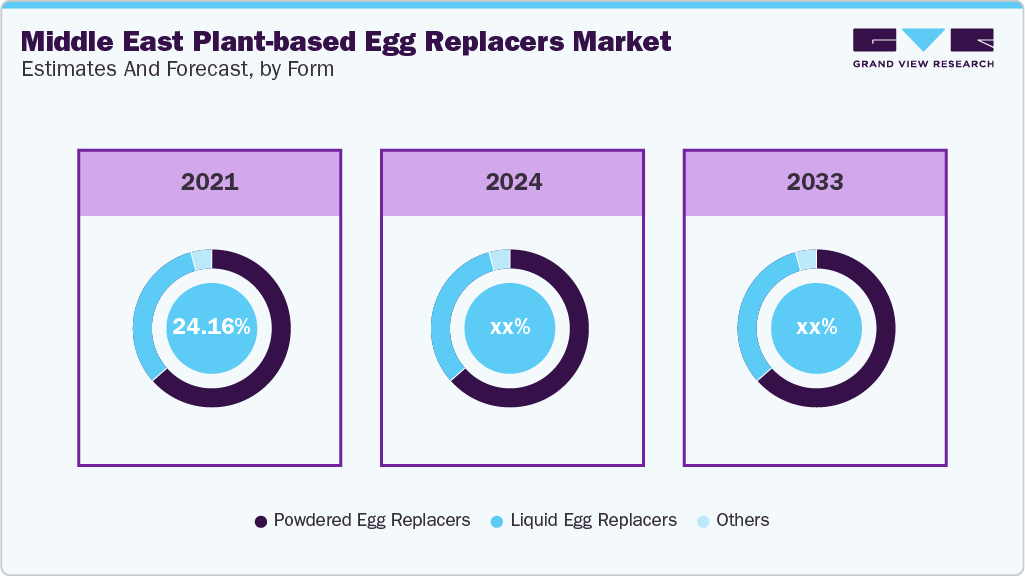
Liquid plant-based egg replacers are projected to grow significantly at the fastest CAGR of 7.1% from 2025 to 2033. Liquid plant-based egg replacers are gaining traction due to their ready-to-use convenience, allowing easy incorporation in cooking and baking without preparation. They closely mimic real eggs’ functional properties, such as binding, emulsifying, and foaming, making them ideal for home and commercial kitchens. Rising consumer demand for clean-label, allergen-free, and sustainable plant-based foods further supports their adoption.
Application Insights
The bakery and confectionery segment accounted for the largest share of around 43.58% in 2024. This dominance is primarily driven by the increasing demand for vegan and allergen-free baked goods, as consumers seek healthier and more sustainable alternatives to traditional ingredients. Plant-based egg replacers are widely used in cakes, muffins, cookies, and pastries for their excellent binding, leavening, and moisture-retention properties. The growing presence of vegan bakeries, cafés, and quick-service restaurants across the UAE, Israel, and Saudi Arabia has further fueled adoption. Additionally, food manufacturers are reformulating existing bakery products using clean-label egg substitutes to cater to evolving consumer preferences for plant-based and ethically sourced ingredients.
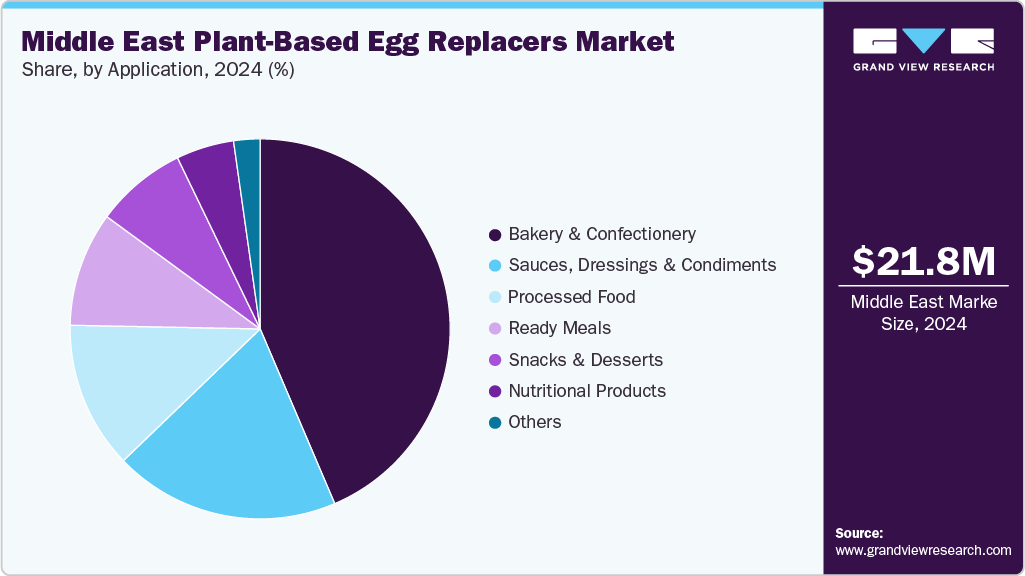
Nutritional products application is projected to grow at the fastest CAGR of 8.8% from 2025 to 2033. Protein powders and meal replacement shakes are the most commonly used nutritional products incorporating plant-based egg replacers. These products benefit from the high protein content, emulsifying properties, and binding abilities of egg replacers, which help improve texture, solubility, and stability. Plant-based egg replacers also make these products suitable for vegans and individuals with egg allergies, providing a cholesterol-free, clean-label option. Their versatility allows manufacturers to create ready-to-drink shakes, powdered meal replacements, and protein bars that meet the growing consumer demand for convenient, plant-based, and protein-rich nutritional solutions.
Country Insights
Saudi Arabia Plant-based Egg Replacers Market Trends
The plant-based egg replacers market in Saudi Arabia accounted for a revenue share of 28.17% in 2024, making it one of the leading markets in the Middle East region. The country’s strong focus on sustainability, innovation, and health-conscious living has accelerated the adoption of plant-based alternatives across both retail and foodservice sectors. A growing expatriate population, coupled with high awareness of vegan and flexitarian diets, has driven demand for egg substitutes in bakery, confectionery, and ready-to-eat products. Moreover, the UAE’s well-established distribution networks, expansion of plant-based food outlets, and government initiatives promoting food security and alternative protein innovation have further supported market growth and consumer acceptance.
UAE Plant-based Egg Replacers Market Trends
The UAE plant-based egg replacers market is experiencing robust growth, primarily driven by a significant shift in consumer lifestyles and dietary preferences. A rising health-conscious population is increasingly seeking cholesterol-free, lower-calorie, and allergen-friendly alternatives to conventional eggs, aligning with broader wellness trends. This is further amplified by a growing awareness of the environmental and ethical concerns associated with industrial animal agriculture, prompting both expatriates and local residents to adopt more sustainable and cruelty-free diets. Government initiatives, such as the UAE's National Food Security Strategy 2051, which encourages investment in alternative protein sources and local food production, are also creating a favourable regulatory environment for market expansion.
Key Middle East Plant-based Egg Replacers Company Insights
The Middle East plant-based egg replacers market exhibits a highly dynamic competitive environment, characterized by intense focus on functional innovation and strategic expansion among key players. Leading players in the Middle East plant-based egg replacers market include Eat Just, Inc., The EVERY Company, and Zero Egg. Competition is driven by continuous product innovation focused on achieving superior taste, texture, and functional properties, alongside strategic partnerships, ingredient diversification, and expansion into new geographical markets, leading to a vibrant yet consolidating market environment.

Key Middle East Plant-based Egg Replacers Companies:
- Eat Just, Inc.
- The Every Company
- Zero Egg
- Hatched
- Simply Eggless
- AcreMade
- OGGS
- Yo! Egg
- Vegg
- Follow Your Heart
Recent Developments
-
In October 2025, a significant strategic move in the alternative protein sector was announced as The Every Company and Vivici confirmed plans to establish a massive 4-million-litre precision fermentation facility in Abu Dhabi, UAE. This collaboration leverages the region's strong investment environment and strategic access to global supply chains, positioning Abu Dhabi as a key hub for sustainable food production. The facility's immense capacity signals both companies' commitment to scaling up the production of high-quality, animal-free proteins necessary to meet rapidly growing global consumer demand, cementing their leadership roles in the future of food technology and ingredient manufacturing.
-
In September 2025, Eat Just, Inc. launched its plant-based chicken alternative, Just Meat, across all 360 stores of the Texas retailer H‑E‑B. This rollout follows a debut event at Austin’s iconic Franklin Barbecue in May and aims to bring the innovative product, which delivers 18g of protein per serving, to frozen-section consumers statewide. The move underscores Eat Just’s commitment to making high-quality plant-based meat widely accessible.
Middle East Plant-based Egg Replacers Market Report Scope
Report Attribute
Details
Market size value in 2025
USD 23.0 million
Revenue Forecast in 2033
USD 38.3 million
Revenue Growth Rate
CAGR of 6.6% from 2025 to 2033
Actual data
2021 - 2024
Forecast period
2025 - 2033
Quantitative units
Revenue in USD million, and CAGR from 2025 to 2033
Report coverage
Revenue forecast, company ranking, competitive landscape, growth factors, and trends
Segments covered
Source, form, application, country
Countries covered
South Korea; UAE; Turkey
Key companies profiled
Eat Just, Inc.; The Every Company; Zero Egg; Hatched; Simply Eggless; AcreMade; OGGS; Yo! Egg; Vegg; Follow Your Heart
Customization scope
Free report customization (equivalent up to 8 analysts’ working days) with purchase. Addition or alteration to country, regional & segment scope.
Pricing and purchase options
Avail customized purchase options to meet your exact research needs. Explore purchase options
Middle East Plant-Based Egg Replacers Market Report Segmentation
This report forecasts revenue growth at regional levels and provides an analysis of the latest trends and opportunities in each sub-segment from 2021 to 2033. For the purpose of this study, Grand View Research has segmented the Middle East plant-based egg replacers market by source, form, application, and country:
-
Source Market Outlook (Revenue, USD Million, 2021 - 2033)
-
Soy
-
Pea
-
Chickpea
-
Potato
-
Algal
-
Others
-
-
Form Market Outlook (Revenue, USD Million, 2021 - 2033)
-
Powdered Egg Replacers
-
Liquid Egg Replacers
-
Others
-
-
Application Market Outlook (Revenue, USD Million, 2021 - 2033)
-
Bakery & Confectionery
-
Sauces, Dressings & Condiments
-
Processed Food
-
Ready Meals
-
Snacks & Desserts
-
Nutritional Products
-
Others
-
-
Country Market Outlook (Revenue, USD Million, 2021 - 2033)
-
Saudi Arabia
-
UAE
-
Turkey
-
Frequently Asked Questions About This Report
b. The Middle East plant-based egg replacers market was estimated at USD 21.8 million in 2024 and is expected to reach USD 23.0 million in 2025.
b. The Middle East plant-based egg replacers market is expected to grow at a compound annual growth rate of 6.6% from 2025 to 2033 to reach USD 38.3 million by 2033.
b. Based on source, soy-based egg replacers dominated the Middle East plant-based egg replacers market in 2024 with a share of about 31.50%.
b. Key players in the Middle East plant-based egg replacers market are Eat Just, Inc.; The Every Company; Zero Egg; Hatched; Simply Eggless; AcreMade; OGGS; Yo! Egg; Vegg; Follow Your Heart, among others.
b. Key factors driving Middle East plant-based egg replacers market growth include rising vegan and flexitarian lifestyles, sustainability awareness, food security initiatives, and increasing adoption in bakery and foodservice industries.


Share this report with your colleague or friend.
Need a Tailored Report?
Customize this report to your needs — add regions, segments, or data points, with 20% free customization.


ISO 9001:2015 & 27001:2022 Certified
We are GDPR and CCPA compliant! Your transaction & personal information is safe and secure. For more details, please read our privacy policy.
Trusted market insights - try a free sample
See how our reports are structured and why industry leaders rely on Grand View Research. Get a free sample or ask us to tailor this report to your needs.