- Home
- »
- Biotechnology
- »
-
Middle East Synthetic Biology Market, Industry Report, 2033GVR Report cover
![Middle East Synthetic Biology Market Size, Share & Trends Report]()
Middle East Synthetic Biology Market (2025 - 2033) Size, Share & Trends Analysis Report By Product (Enzymes, Cloning Technologies Kits, Xeno-Nucleic Acids), By Technology (PCR, NGS), By Application (Healthcare, Non-healthcare), By End Use, By Country, And Segment Forecasts
- Report ID: GVR-4-68040-792-0
- Number of Report Pages: 150
- Format: PDF
- Historical Range: 2021 - 2023
- Forecast Period: 2025 - 2033
- Industry: Healthcare
- Report Summary
- Table of Contents
- Segmentation
- Methodology
- Download FREE Sample
-
 Download Sample Report
Middle East Synthetic Biology Market Summary
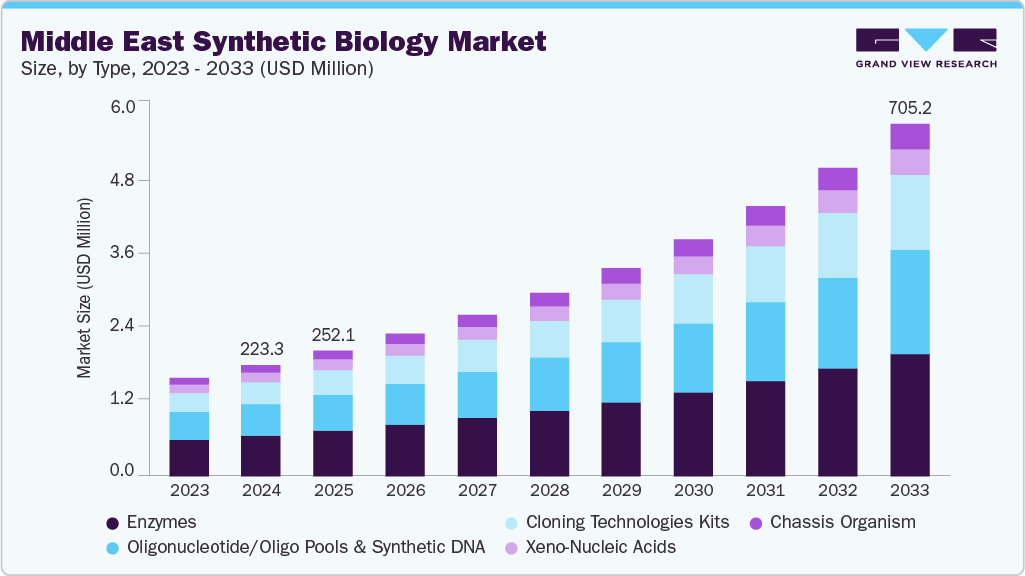
The Middle East synthetic biology market size was estimated at USD 223.3 million in 2024 and is expected to reach USD 705.2 million by 2033, growing at a CAGR of 13.47% from 2025 to 2033, Growing biotechnology investments, demand for novel treatments, and encouraging government programs to develop the area's synthetic biology capabilities are the main drivers of this expansion.
Technical Advancements
The Middle Eastern market is expanding rapidly due to the rapid advancements in synthetic biology technologies. These technological advancements shorten development times, cut production costs, and improve the accuracy and scalability of synthetic biology applications, making their adoption more viable for the region's industrial, healthcare, and agricultural sectors.
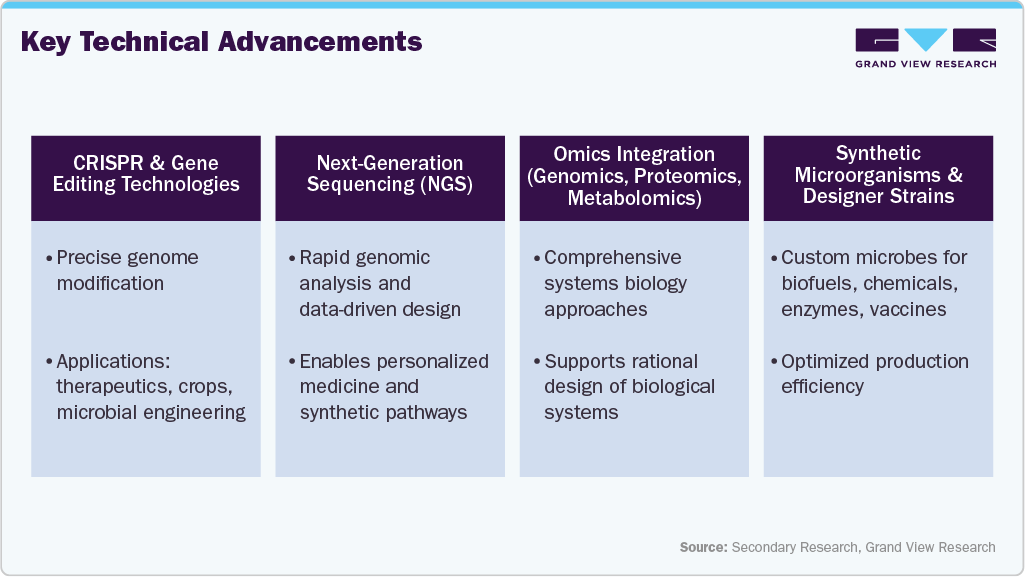
In addition, combining synthetic biology with artificial intelligence (AI) and machine learning (ML) speeds up biomolecule design, predictive modeling, and research and development. These developments, along with sophisticated laboratory automation and bioprocessing methods, facilitate the quick commercialization of sustainable chemicals, bio-based materials, and innovative treatments. Greater adoption rates, more robust innovation pipelines, and increased investor confidence are all being observed in the Middle East market as regional research institutions, startups, and government-funded initiatives make greater use of these technological developments.
Academic & Research Expansion
One of the main factors driving the growth of the synthetic biology market in the Middle East is the expansion of academic and research infrastructure. Prominent educational institutions and research centers in nations such as Saudi Arabia, Qatar, and the United Arab Emirates are progressively incorporating synthetic biology into their biotechnology and life sciences curricula. Creating biotechnology incubators, innovation hubs, and specialized research centers has sped up the development of regionally specific applications in genetic engineering, sustainable agriculture, and drug discovery. These projects, which are bolstering the region's R&D ecosystem and developing a qualified scientific workforce capable of advancing synthetic biology research, are backed by national funding programs and partnerships with international organizations.
Moreover, the growth of biotechnology startups and academic-industry partnerships fosters a culture of innovation and commercialization. Regional research groups collaborate with pharmaceutical and industrial biotech companies to turn lab results into commercially viable goods like industrial enzymes, bioengineered medicines, and sustainable biomaterials.
Market Concentration & Characteristics
The high degree of innovation is a major driver of the Middle East synthetic biology industry, as the region increasingly embraces advanced tools such as gene editing, DNA synthesis, and computational modeling to develop novel biological systems. Ongoing advancements are improving the accuracy, effectiveness, and scalability of research and production processes in automation, AI, and bioinformatics.
A major factor propelling the Middle East synthetic biology industry is the increase in mergers and acquisitions (M&A) activity, which reflects industry consolidation and growing investor confidence. Regional and global biotechnology companies are making increased strategic alliances, acquisitions, and joint ventures to improve their research capacities, diversify their product lines, and enter new markets more quickly.
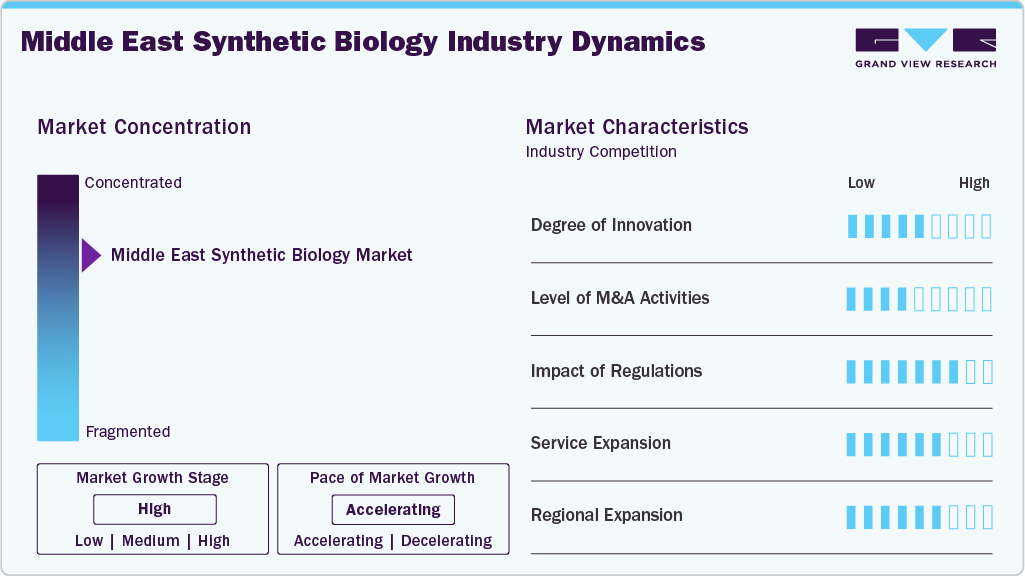
Regulatory frameworks significantly influence the development of the Middle East synthetic biology industry. Standardized biosafety, ethical, and quality control regulations governing genetic modification, biomanufacturing, and bioengineering operations are gradually being established in the region.
The Middle East synthetic biology industry is largely driven by product expansion, as businesses constantly broaden their product lines to meet the needs of new applications in industrial biotechnology, healthcare, and agriculture. Biotechnology companies are creating new gene-edited medicines, bioengineered enzymes, and sustainable biomaterials to satisfy the growing need for novel and specialized solutions.
The Middle East synthetic biology industry is largely driven by regional expansion, as businesses look to expand internationally to exploit new opportunities. To serve local and nearby markets, biotechnology companies are investing in new research centers, manufacturing facilities, and distribution networks in strategic markets such as the UAE, Saudi Arabia, and Qatar. Strategic alliances, partnerships, and joint ventures with regional players facilitate technology transfer and market penetration.
Product Insights
The enzymes segment dominated the Middle East synthetic biology market in 2024, accounting for a 36.92% share. Because of their effectiveness, specificity, and capacity to lower production costs, enzymes are frequently employed as catalysts in drug development, bioprocessing, and the production of sustainable chemicals. The segment's dominant market position is also reinforced by continued enzyme engineering research and development, and the growing need for eco-friendly biocatalysts.
The cloning technologies kits segment is expected to witness the fastest CAGR in the Middle East synthetic biology market over the forecast period. The growing use of gene cloning and genetic engineering methods in research, medication development, and industrial biotechnology applications is causing this rapid expansion.
Technology Insights
In 2024, the PCR segment held the largest revenue share of 30.01%. in the Middle East synthetic biology industry. The segment's growth was further aided by growing government initiatives to strengthen the molecular biology infrastructure and the growing use of PCR-based techniques in clinical and research laboratories.
The genome editing technology segment will witness the fastest CAGR over the forecast period. Genome editing will become a major focus area in synthetic biology innovation due to growing investments in gene therapy development and favorable regulatory frameworks in the Middle East, which are also anticipated to accelerate market growth further.
Application Insights
In 2024, the healthcare segment held the largest revenue share in the Middle East synthetic biology industry and also expected to grow with the fastest rate over the forecast period, driven by growing demand for advanced diagnostics, targeted therapies, and personalized medicine solutions. Moreover, the growing prevalence of chronic diseases, rising healthcare costs, and the growing use of synthetic biology in drug development and biopharmaceutical manufacturing further supported the segment's growth.
The non-healthcare segment is expected to witness the significant CAGR over the forecast period, due to the growing use of synthetic biology in industrial biotechnology, environmental solutions, and agriculture. Furthermore, encouraging government programs and collaborations between Middle Eastern academic institutions and business entities are fostering innovation and establishing the non-healthcare sector as a major growth area for the synthetic biology market.
End Use Insights
In 2024, the biotechnology and pharmaceutical companies segment accounted for 54.90% of the total share of the Middle East synthetic biology market. These businesses are using synthetic biology more and more to create new biological systems, increase the productivity of biomanufacturing, and hasten the creation of gene therapies, vaccines, and biosimilars.
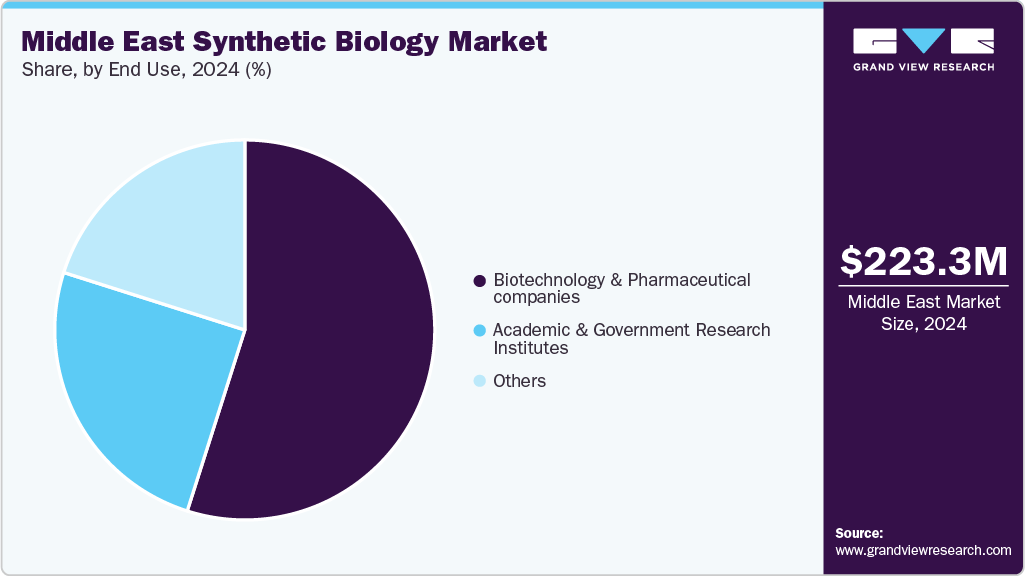
The academic and research institutes segment is projected to grow considerably in the Middle East synthetic biology market over the forecast period. Growing academic programs in metabolic pathway design, genetic engineering, and bioinformatics are encouraging creativity and advancing synthetic biology in the area.
Country Insights
Saudi Arabia Middle East Synthetic Biology Market Trends
Saudi Arabia is emerging as a significant player in the Middle East synthetic biology market, driven by increasing government investments in biotechnology research, initiatives under Vision 2030 to diversify the economy through innovation, and establishing advanced research centers and biomanufacturing facilities. The nation's increasing emphasis on genetic engineering, healthcare biotechnology, and sustainable bio-based solutions encourages partnerships with global biotech firms and supports market expansion.
Kuwait Middle East Synthetic Biology Market Trends
Kuwait is gradually becoming an increasingly developing market for synthetic biology in the Middle East due to rising investments in biotechnology research, growing collaborations between academic institutions and international biotech firms, and increasing government focus on diversifying the economy through scientific innovation. The country’s emphasis on healthcare modernization, biopharmaceutical development, and environmental biotechnology initiatives also expands its synthetic biology landscape.
Key Middle East Synthetic Biology Company Insights
The Middle East synthetic biology industry is characterized by several established global and regional players who drive market growth through advanced product portfolios, technological innovation, and strategic collaborations. Leading firms with a wide range of synthetic biology tools, reagents, and services supporting applications in genomics, biomanufacturing, and healthcare biotechnology, including Thermo Fisher Scientific, Inc., Merck KGaA (Sigma-Aldrich Co. LLC), Illumina, Inc., Novozymes, and New England Biolabs, have a substantial impact on the market.
Bota Biosciences Inc., Codexis, Inc., Creative Biogene, Creative Enzymes, Eurofins Scientific, and Pareto Bio, Inc. are among the companies that are growing their presence in the Middle East by providing tailored solutions and improving local access to state-of-the-art platforms for microbial strain development, gene synthesis, and enzyme engineering. These companies increasingly collaborate with local biotechnology companies and research institutes to promote innovation and quicken technology transfer.
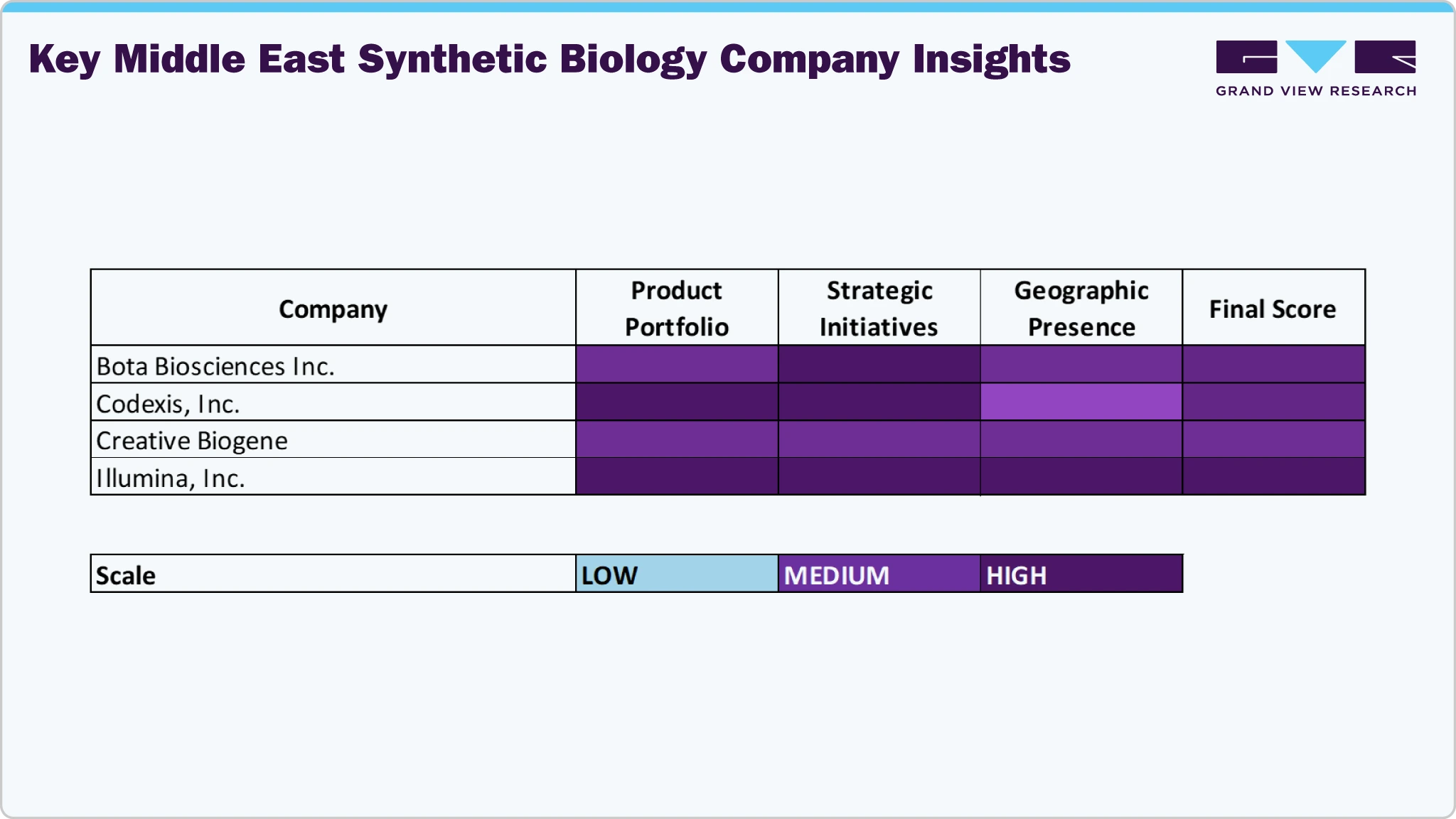
Global expertise and regional initiatives are coming together in the synthetic biology market as biotechnology, healthcare innovation, and sustainable manufacturing investments increase throughout the Middle East. Commitments to accessibility, biosecurity, and alignment with national innovation goals will increasingly shape the market landscape in the future, establishing synthetic biology as a game-changing force behind the bioeconomy in the region.
Key Middle East Synthetic Biology Companies:
- Bota Biosciences Inc.
- Codexis, Inc.
- Creative Biogene
- Creative Enzymes.
- Enbiotix, Inc.
- Illumina, Inc.
- Merck Kgaa (Sigma-Aldrich Co. LLC)
- New England Biolabs
- Eurofins Scientific
- Novozymes
- Pareto Bio, Inc.
- Scarab Genomics, LLC
- Synthego
- Synthetic Genomics Inc.
- Thermo Fisher Scientific, Inc.
Recent Developments
-
In January 2025, Synthego entered a strategic licensing agreement with AstraZeneca to commercialize the eSpOT-ON CRISPR enzyme, enhancing global gene-editing capabilities and indirectly stimulating the Middle East synthetic biology market demand.
-
In November 2022, Illumina launched its state-of-the-art Solutions Center in Dubai, United Arab Emirates, to strengthen regional genomics capabilities, advancing precision medicine and fueling Middle East synthetic biology market growth.
Middle East Synthetic Biology Market Report Scope
Report Attribute
Details
Market size value in 2025
USD 252.1 million
Revenue forecast in 2033
USD 705.2 million
Growth rate
CAGR of 13.47% from 2025 to 2033
Base year for estimation
2024
Historical data
2021 - 2023
Forecast period
2025 - 2033
Quantitative units
Revenue in USD million/billion and CAGR from 2025 to 2033
Report coverage
Revenue forecast, company ranking, competitive landscape, growth factors, and trends
Segments covered
Product, technology, application, end use, country
Country scope
Saudi Arabia; UAE; Kuwait; Qatar; Oman; Rest of MEA
Key companies profiled
Bota Biosciences Inc.; Codexis, Inc.; Creative Biogene; CREATIVE ENZYMES; Enbiotix, Inc.; Illumina, Inc.; Merck KGaA (Sigma-Aldrich Co. LLC); New England Biolabs; Eurofins Scientific; Novozymes; Pareto Bio, Inc.; Scarab Genomics, LLC; Synthego; Synthetic Genomics Inc.; Thermo Fisher Scientific, Inc.
Customization scope
Free report customization (equivalent up to 8 analyst’s working days) with purchase. Addition or alteration to country, regional & segment scope.
Middle East Synthetic Biology Market Report Segmentation
This report forecasts revenue growth and provides an analysis on the latest trends in each of the sub-segments from 2021 to 2033. For this report, Grand View Research has segmented the Middle East synthetic biology market on the basis of product, technology, application end use, and country:
-
Product Outlook (Revenue, USD Million, 2021 - 2033)
-
Oligonucleotide/Oligo Pools and Synthetic DNA
-
Enzymes
-
Cloning Technologies Kits
-
Xeno-Nucleic Acids
-
Chassis Organism
-
-
Technology Outlook (Revenue, USD Million, 2021 - 2033)
-
NGS Technology
-
PCR Technology
-
Genome Editing Technology
-
Bioprocessing Technology
-
Other Technologies
-
-
Application Outlook (Revenue, USD Million, 2021 - 2033)
-
Healthcare
-
Clinical
-
Bio/Pharmaceuticals
-
Diagnostics
-
-
Non-Clinical
-
-
Non-healthcare
-
Biotech Crops
-
Specialty Chemicals
-
Bio-fuels
-
Others
-
-
-
End Use Outlook (Revenue, USD Million, 2021 - 2033)
-
Biotechnology and Pharmaceutical companies
-
Academic and Research Institutes
-
Others
-
-
Country Outlook (Revenue, USD Million, 2021 - 2033)
-
Middle East
-
Saudi Arabia
-
UAE
-
Kuwait
-
Qatar
-
Oman
-
Rest of Middle East
-
-
Frequently Asked Questions About This Report
b. The Middle East synthetic biology market size was estimated at USD 223.3 million in 2024 and is expected to reach USD 252.1 million in 2025.
b. The Middle East synthetic biology market is projected to grow at a compound annual growth rate (CAGR) of 13.47% from 2025 to 2033, reaching USD 705.2 million by 2033.
b. Saudi Arabia held the largest share, 36.95%, of the overall revenue in 2024. This dominance is attributed to substantial government investment in biotechnology, the expansion of research infrastructure, and growing strategic collaborations focused on advancing synthetic biology capabilities in the region.
b. Some key players operating in the Middle East synthetic biology market include Bota Biosciences Inc., Codexis, Inc., Creative Biogene, CREATIVE ENZYMES, Enbiotix, Inc., Illumina, Inc., Merck KGaA (Sigma-Aldrich Co. LLC), New England Biolabs, Eurofins Scientific, Novozymes, Pareto Bio, Inc., Scarab Genomics, LLC, Synthego, Synthetic Genomics Inc., and Thermo Fisher Scientific, Inc. among others
b. The Middle East synthetic biology market is witnessing growth driven by increasing public and private R&D investments, expanding biotech innovation programs and academic partnerships, and rising adoption of engineered biological solutions across healthcare, agriculture, and industrial applications.


Share this report with your colleague or friend.
Need a Tailored Report?
Customize this report to your needs — add regions, segments, or data points, with 20% free customization.


ISO 9001:2015 & 27001:2022 Certified
We are GDPR and CCPA compliant! Your transaction & personal information is safe and secure. For more details, please read our privacy policy.
Trusted market insights - try a free sample
See how our reports are structured and why industry leaders rely on Grand View Research. Get a free sample or ask us to tailor this report to your needs.